

Growing fig trees from cuttings is a straightforward, Extension-backed process: take a healthy dormant stick, root it in a moist medium, then pot it up and harden it off.
Photos and videos courtesy of Cross SL Ranch, a fig nursery near Bellville, Texas. HODEGEO and Cross SL Ranch are run by the same family. For Texas and Gulf Coast timing, start at the Cross SL nursery page. For site constraints at home, see the garden and property checklist.
Taking healthy fig cuttings
Take cuttings when the tree is fully dormant—after leaf drop and before spring bud break—as Texas A&M AgriLife and UC ANR advise. UC Master Gardeners (Shasta) give a window from October to late winter. Clemson HGIC suggests taking fig cuttings right after leaf drop and, if you need to wait, wrapping them in a damp (not wet) towel in a bag in the fridge until early spring.
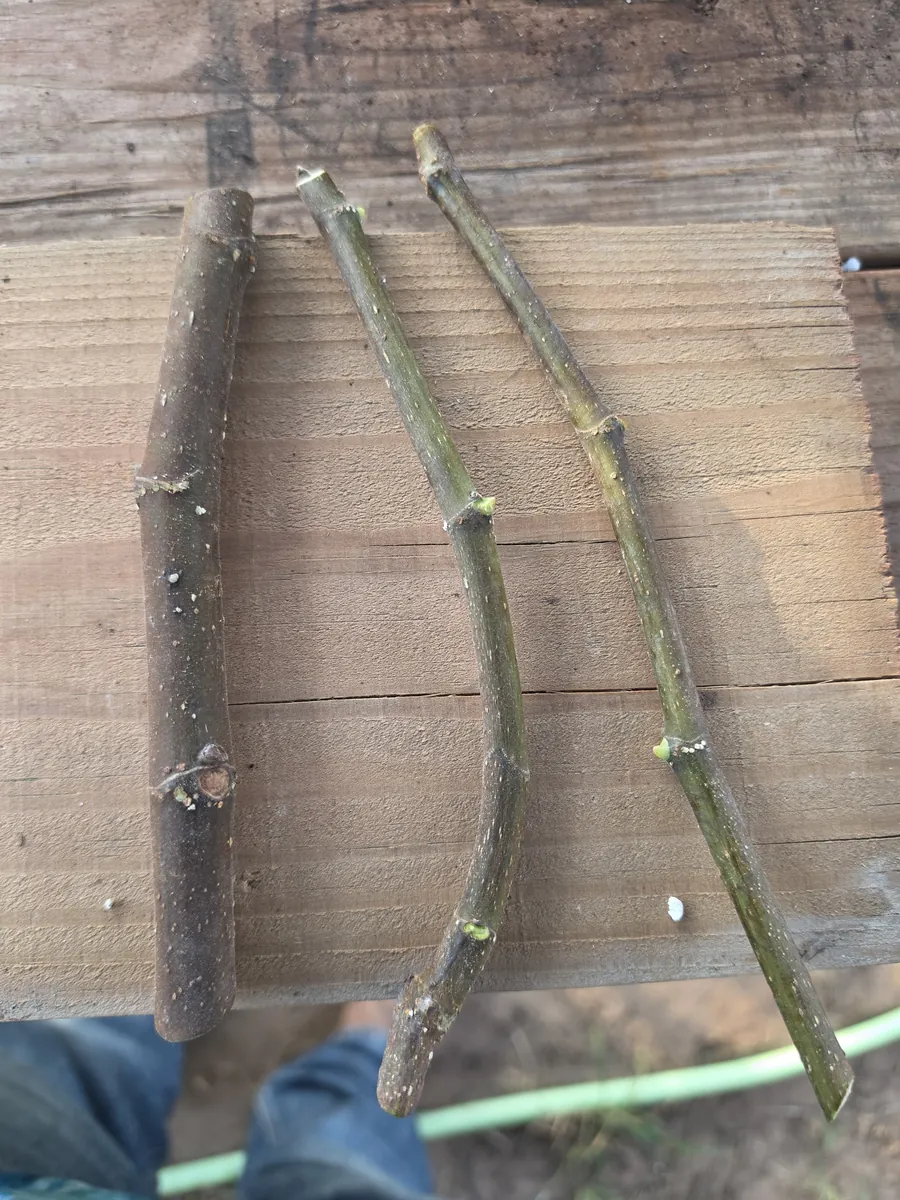
AgriLife describes cuttings 6–10 inches long and ½–1 inch thick. UC ANR describes 8–12 inches and ½–¾ inch, ideally basal wood with a heel. Mark which end is up: Clemson notes that upside-down cuttings will not root. A slanted top cut helps you keep the orientation straight, as the Shasta Master Gardeners describe. Choose firm, healthy wood with intact nodes, and keep cuttings from drying out before you stick them.
We may earn a commission from links on this page. How we choose →
Fiskars 6″ non-stick pruning snips
Six-inch steel-blade snips with a non-stick coating and a micro tip for cuts in tight spaces.
Affiliate link
Garden Safe TakeRoot rooting hormone, 2-ounce (1 pack)
A 2-ounce Garden Safe TakeRoot rooting hormone, sold as a one-pack and made in the USA. Rooting hormone is optional for figs: Ask Extension and UF/IFAS say it can improve the percentage and uniformity of roots, while UC Master Gardeners do not treat it as required. Clemson advises not watering immediately after sticking, which can wash powder off.
Affiliate link
Rooting setups: perlite, bags, and a humidity tent
Figs root in more than one medium. Match the setup to the space you have, and keep the medium moist, not wet. Not every cutting roots; N.C. Cooperative Extension estimates about 75 percent success in its hardwood-cutting note.
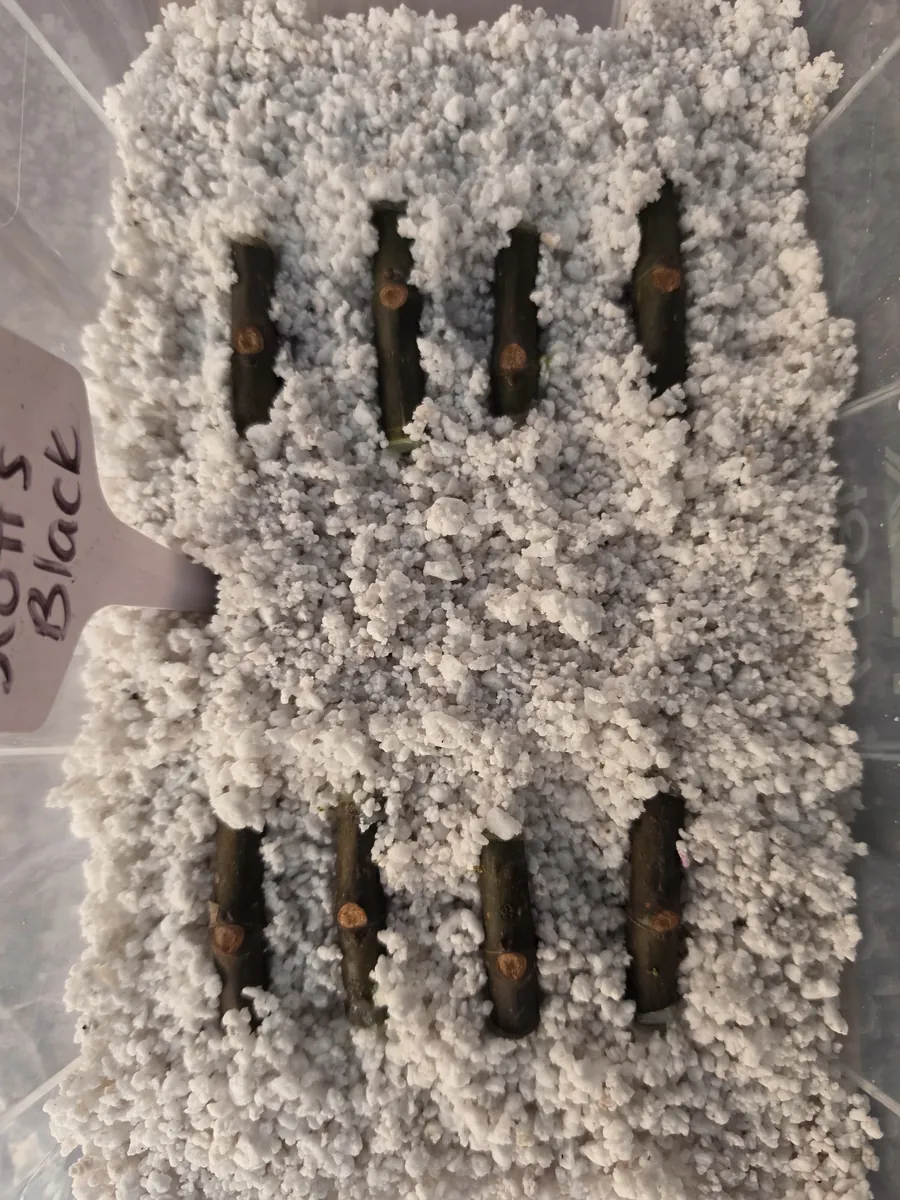
Perlite. Stick cuttings in moist, porous media with at least half of the cutting below the surface. UF/IFAS describes callus forming in 2–3 weeks at 50–60°F in that kind of mix. At the Cross SL Ranch nursery, cuttings are stood upright in a clear bin of perlite, which holds moisture and air around the buried wood.
Espoma Organic Perlite, 8-quart bag (PR8)
An 8-quart bag of 100% perlite with no additives. Espoma lists it for loosening potting soils and for starting cuttings.
Affiliate link
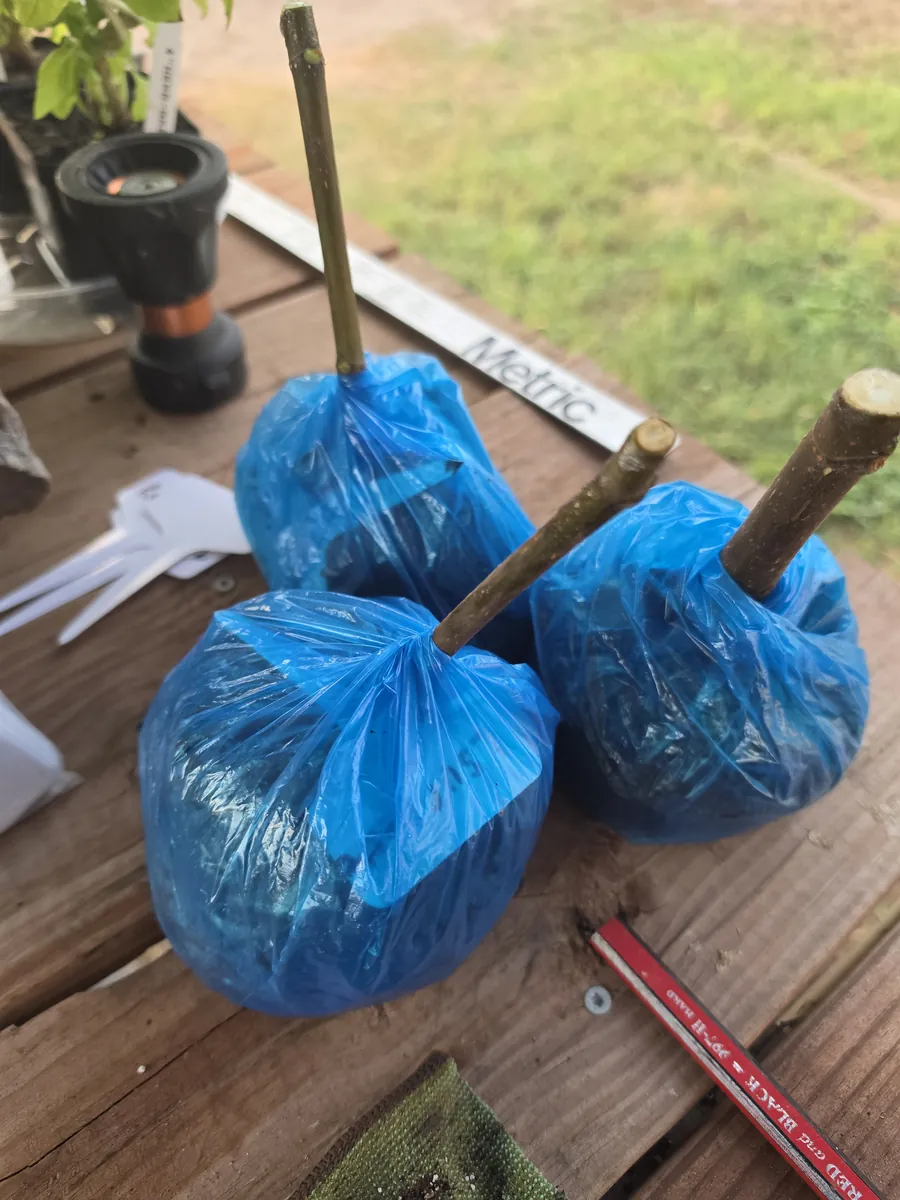
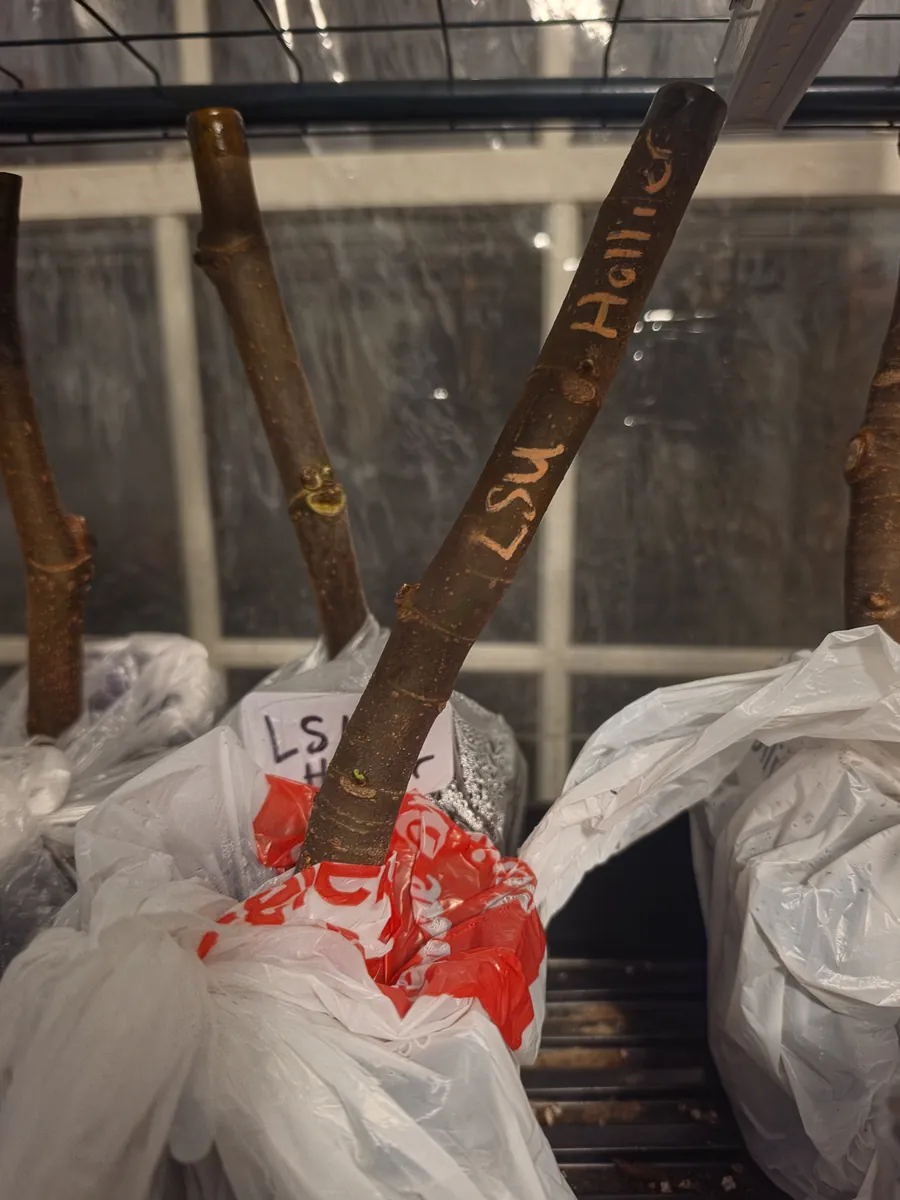
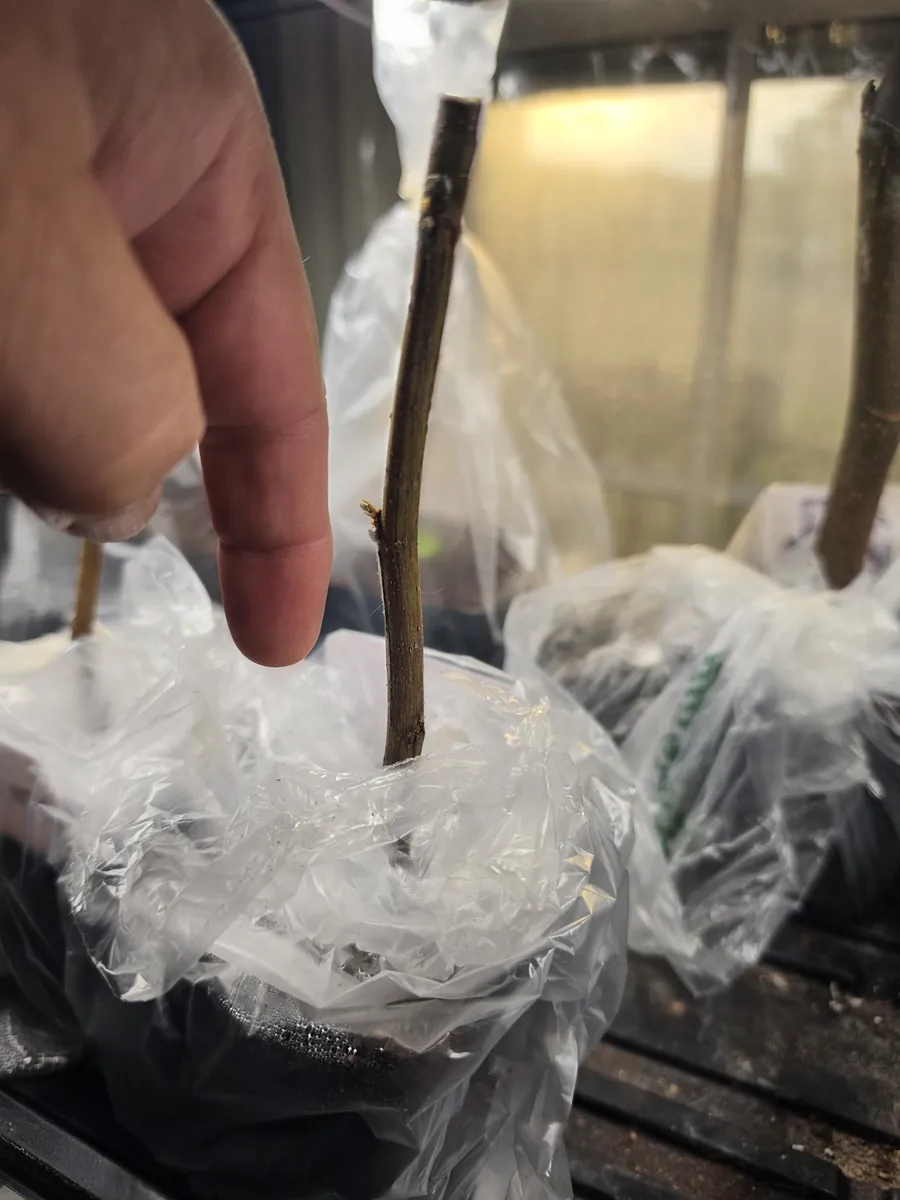
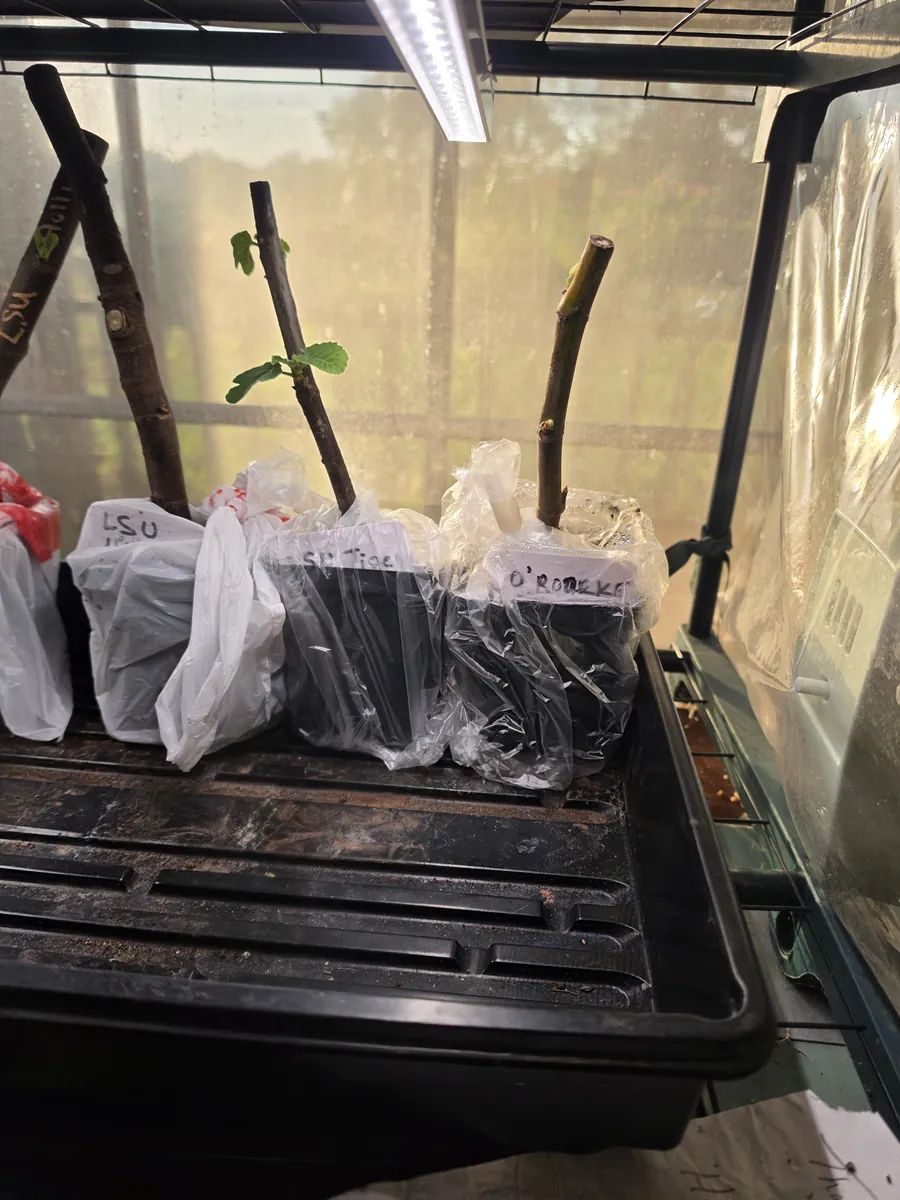
Humidity bags. Once cuttings are in a medium, a loose plastic bag around the pot or bin holds humidity so the wood does not dry out before roots form. N.C. Extension and Ask Extension both describe keeping humidity high, for example in a clear tote or tub. The bags in these photos wrap the base of each cutting; the stick stays above the plastic so you can watch the buds.
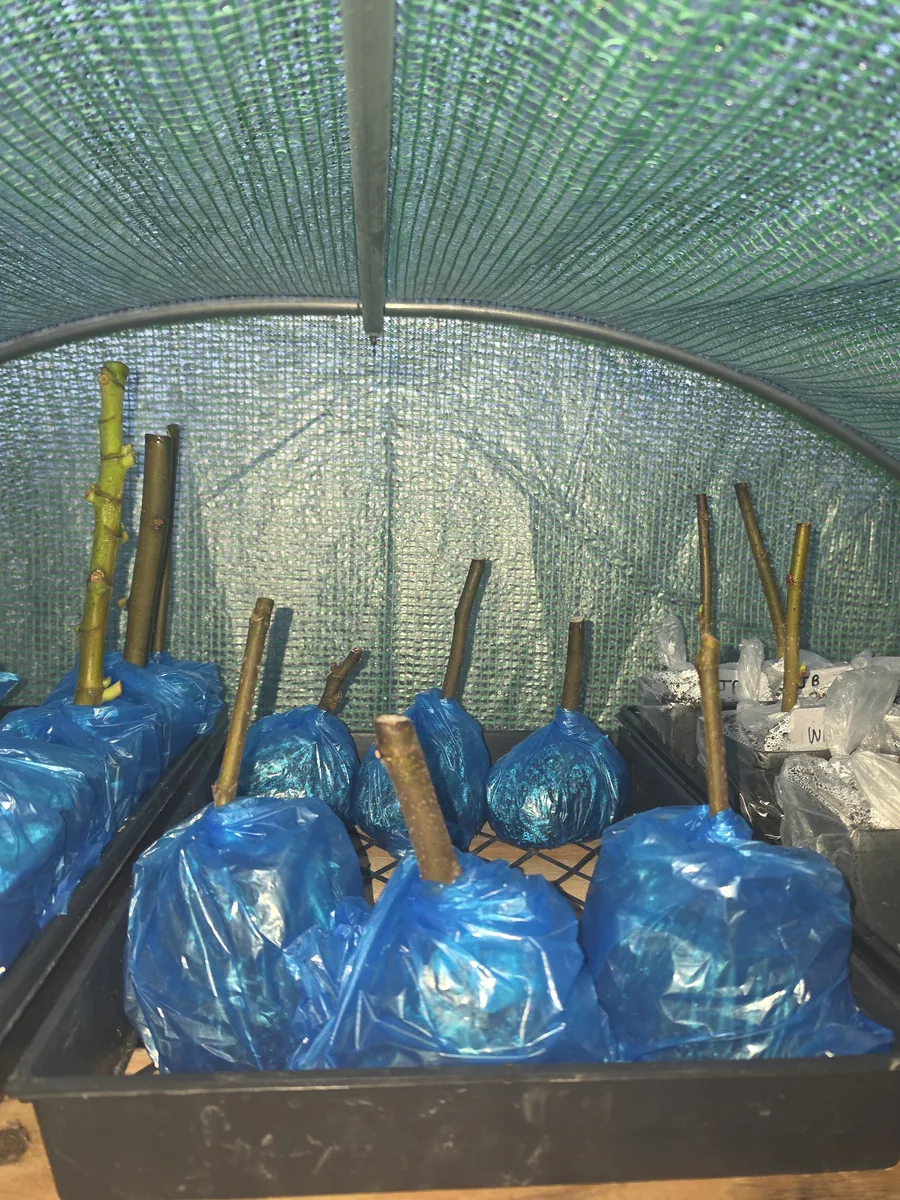
A humidity tent. A small hoop tunnel or covered tray does the same job for a whole batch. Leafy cuttings in particular need high humidity—near 100 percent, in UF/IFAS propagation guidance—until roots can take up water.
Water. N.C. Extension describes placing a cutting in a vase until roots show, then potting it up. Water-grown roots still have to adjust to potting mix, so keep the new mix evenly moist at first.
Soil or potting mix. AgriLife notes that commercial potting media can work. The Shasta Master Gardeners advise a well-draining mix with no added fertilizer, which can inhibit rooting, and burying at least half the cutting.
Damp-towel bag. AgriLife describes wrapping cuttings in a moist paper towel in a plastic bag for 10–14 days to form callus. N.C. Extension describes keeping that bundle somewhere warm, such as the top of a fridge, with roots in 3–6 weeks. This is sometimes called a burrito wrap; it is a storage-and-callus method, not the bag-around-the-pot setup in the photos above.
Humidity and warmth
Most plants root best at 70–80°F, according to the UF/IFAS propagation guide. Ask Extension cites 2–4 weeks for roots in warm, moist shavings at 78–80°F. A seedling heat mat can help in a cool room; use it indoors, and a thermostat helps you stay in that range instead of overheating the medium.
VIVOSUN 10″×20.75″ seedling heat mat and digital thermostat combo
A 10 by 20.75 inch, 20-watt seedling heat mat sold with a VIVOSUN digital thermostat, for seed starting and cutting propagation. The maker rates the mat around 68–86°F, says to use it indoors only, and lists an IP67-rated, MET-standard surface. Do not immerse the mat in water.
Affiliate link
What first buds and roots look like
Callus—the pale, slightly swollen tissue at the buried end—comes first. AgriLife describes that stage in about 10–14 days; UF/IFAS describes 2–3 weeks. Roots follow later, on a wider timetable: 2–4 weeks in warm, moist conditions (Ask Extension), 3–6 weeks (N.C. Extension), or 6 weeks to several months for hardwood cuttings stuck in pots (UC Master Gardeners). Timing depends on temperature and method.
A green bud swelling at a node is a good sign the cutting is alive, but it is not proof of roots. Cuttings can leaf out on stored energy before any roots have formed. Leave the humidity cover on, and do not tug the cutting to “check.” Clemson warns that disturbing roots too early damages them. Wait until roots show at drain holes, or until the cutting resists a gentle wiggle because it is anchored.
When and how to pot up
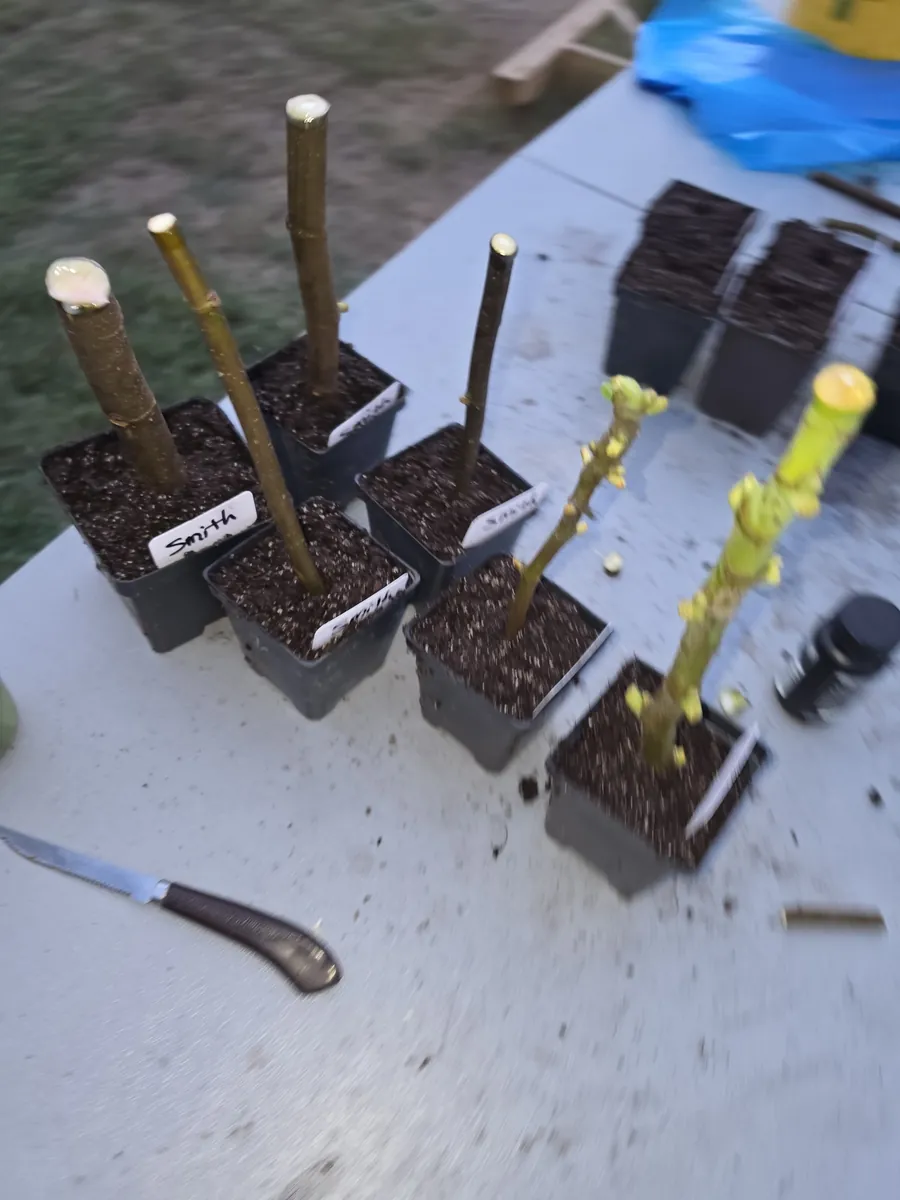
Pot up once roots have formed. Ask Extension suggests a one-gallon pot, with one-third to one-half of the cutting in the mix. Clemson advises waiting until roots reach the drain holes before separating cuttings, and not tugging on them. Use a well-draining potting mix at this stage—not the fertilizer-free rooting medium you started with, and not a heavy garden soil.
Espoma Organic Potting Soil Mix, 8-quart bag (AP8)
An 8-quart organic potting mix of sphagnum peat moss, humus, and perlite, with earthworm castings, alfalfa meal, kelp meal, feather meal, and mycorrhizae. Espoma lists it for new plantings and for transplanting into a larger container. Use it when you pot up rooted cuttings, not as the rooting medium—Master Gardener guidance is to root in a mix with no added fertilizer.
Affiliate link
Early care after potting
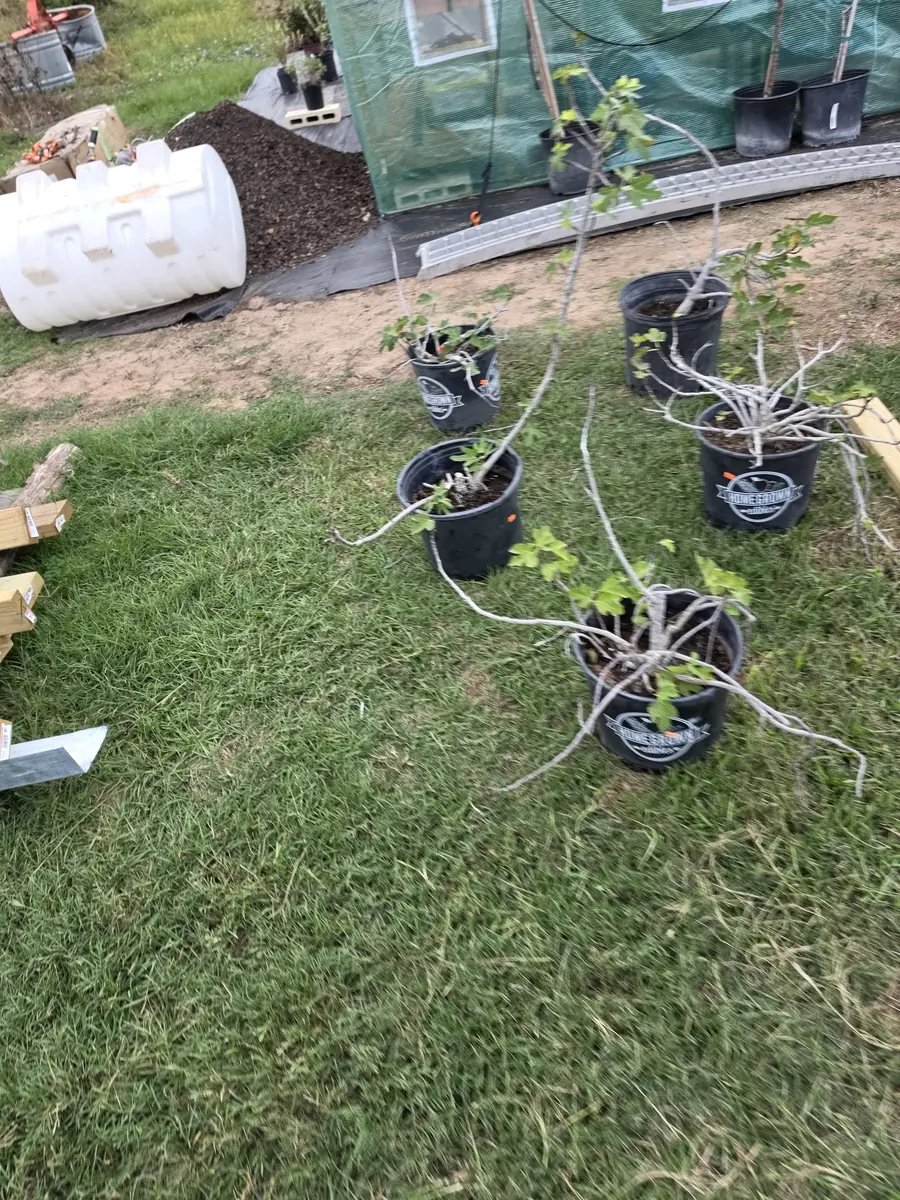
Harden the plants off before you give them full sun or a dry wind. The UF/IFAS propagation guide says to lower humidity gradually, then increase light gradually; plants that skip that step survive transplanting less well. Ask Extension describes moving them into bright light without direct sun first. N.C. Extension describes outdoor shade first for newly potted cuttings.
UC ANR advises growing a rooted cutting for a season or more (12–15 months) before planting it in the ground. AgriLife describes planting dormant, rooted cuttings in late winter or early spring, 2–3 inches deeper than they grew in the pot. For Gulf Coast timing, LSU AgCenter has suggested late March in south Louisiana. If a freeze is in the forecast after you move plants outside, see winter plant protection.
Common mistakes
- A wet, soupy medium. Rot follows. UF/IFAS and Ask Extension both say to keep media moist, not wet. Use a well-draining, unfertilized mix while rooting.
- Reading new leaves as roots. Leafy cuttings need high humidity or mist until roots work. Do not remove the cover too early.
- Mold on the medium or the wood. There is no fig-specific Extension page on this. Moist-not-wet media and some airflow are the same steps UF/IFAS gives for rot. From Cross SL Ranch’s own experience, vent a bag or tote, ease the humidity a little, and discard a cutting that is clearly rotting rather than trying to spray it back to health.
- Sticking a cutting upside down. It will not root (Clemson). Mark the top end when you cut.
- Tugging to check for roots too soon. That damages new roots (Clemson).
- Letting cuttings dry out before you stick them. That cuts survival (Clemson).
From a cutting to fruit
Ask Extension describes a crop in 2–3 years and a full crop in 4–5 years with good care. Some varieties fruit younger: LSU AgCenter notes that LSU Purple can fruit in 1–2 years. Variety choice and Texas planting notes belong on the Cross SL Ranch site once those pages are up; until then, see the nursery page and the YouTube channel.
Extension sources cited in this guide: Texas A&M AgriLife, Figs: Texas Fruit and Nut Production (PDF); UC ANR fig propagation; UC Master Gardeners (Shasta), hardwood cuttings (PDF); N.C. Cooperative Extension (Gates Co.); UF/IFAS, The Fig (MG214); UF/IFAS plant propagation guidance; Clemson HGIC, hardwood cuttings; Ask Extension, fig trees from cuttings; and LSU AgCenter planting timing.
FAQ
Can you root fig cuttings in water?
Yes. North Carolina Cooperative Extension describes setting a cutting in a vase until roots show, then potting it up. Water-grown roots still have to adjust to potting mix, so keep the new mix evenly moist and do not let those roots dry out. Perlite, potting media, and a damp-towel bag are other Extension-backed options.
How long does it take for fig cuttings to root?
It depends on temperature and method, and not every cutting roots. Texas A&M AgriLife describes callus in 10 to 14 days. Roots may appear in 2 to 4 weeks around 78–80°F (Ask Extension), in 3 to 6 weeks (N.C. Extension), or in 6 weeks to several months for pot-stuck hardwood cuttings (UC Master Gardeners). N.C. Extension estimates 75 percent success.
When is the best time to take fig cuttings?
Take them when the tree is fully dormant, after leaf drop and before spring bud break, as Texas A&M AgriLife and UC ANR advise. UC Master Gardeners give a window from October to late winter. Clemson suggests taking cuttings after leaf drop, or wrapping them in a damp (not wet) towel in a bag in the fridge until early spring.
Why does my fig cutting have leaves but no roots?
The cutting is using stored energy to push leaves before roots have formed. UF/IFAS says leafy cuttings need high humidity or mist until roots can take up water. Do not treat new leaves as a sign of roots, and do not pull the humidity cover off too early. Watch for wilting, and keep the medium moist, not wet.
When should I pot up rooted fig cuttings?
Pot them up once roots have formed. Ask Extension suggests a one-gallon pot, with one-third to one-half of the cutting in the mix. Clemson advises waiting until roots reach the drain holes before you separate cuttings, and not tugging on them. After potting, harden them off: lower humidity gradually, then increase light, as UF/IFAS propagation guidance describes.
Why are my fig cuttings getting moldy?
There is no fig-specific Extension page on mold. Keep the medium moist, not wet, and give the setup some airflow, following the same moisture advice UF/IFAS gives to help prevent rot. From Cross SL Ranch’s own experience, easing humidity, opening a bag or tote to vent, and discarding a cutting that is clearly rotting will do more than spraying.
Garden & Property · Property checklist · Winter plant protection · Cross SL Ranch · Affiliate disclosure
More Field Notes